|
I took a quick trip this week to Nashville for an appointment at the long covid clinic there, and I found lodging at the Skarritt Bennett center. It was a college campus until it closed in 1988 and is now a conference center with lodging in the old dorms. The rooms were large and comfortable, if clearly former dorm rooms, and it was crazy reasonable, and the campus is absolutely gorgeous. And so quiet, right next to Vanderbilt. It's the furthest I've been able to drive since January, and I didn't do much at all except hang out on the campus. I took my own food (which I often do when I travel), so I spent all my extra time sketching. I love this neo-gothic style of architecture. My lifelong church Idlewild Pres is in this same vein and shares a quarry with Rhodes. This place apparently shared an architect with Rhodes and had slightly blonder stone, but it felt like a mini-me of a familiar place. The arches and slate roofs and the glow of the stone all called me. In spite of my familiarity, it took me a few sketches to get my sea legs with this place. The first two were in Inktense pencils, which I've been enjoying lately. I think there just wasn't enough definition in that first one, with the wide view of so many different elements. The pencils felt better in the more limited sketch of a pair of arches. The next day I used Diamine golden brown ink, which melts into the paint, and it fuzzed up some of the lighter elements of the drawing, but the color and overall feel did great. But I'd forgotten to refill this pen before I left, so I switched to a waterproof brown ink after. I've been enjoying that ink a lot lately, but somehow the next one felt a little more stiff.I think it worked better on the last sketch, a fast one at twilight of a magnificent cherry tree. I really enjoyed my stay and hope to go back again soonish and visit the museums I didn't have the time to get to this trip.
0 Comments
I'm continuing to play with small prints and varied backgrounds. The very back layer of both of these is the same simple, uncarved shape, yellow in the top and orange below. Then I put a second sky layer on each before adding the black figure block. It's Glastonbury Abbey on top and Stonehenge below. I've missed ancient places lately (though a visit to The Cloisters helped a lot!), and doing these prints was a way to revisit them mentally.
I like to do one small sized, mostly for me project in the summer. It's a good time to play before the fall shows ramp up. These are small and achievable sizes, and people may or may not follow me into my ancient stones preoccupation. I might or might not do full editions of any of them, but at the least I'll have a selection of small, achievably priced prints once the fall shows do roll around. I walked through the entrance hall and stepped out into the first cloister and fell immediately in love. I had only spent a handful of days in New York and had never before had the time to take the longer ride up to the north end of Manhatten. The Cloisters is a bit remote, which I am sure protects it from the worst of the crowds, but it is so worth the journey. In my more restricted last few years I have been missing Europe badly. I love traveling places where the history is old. I love being surrounded by Medieval buildings and carvings. The Cloisters was such a balm for me. It's a crazy mish-mash, but it is so beautifully done that it utterly works. Barnard, a sculptor, lived and worked on the continent in the early 20th C and became a compulsive collector of Medieval carved stone. He bought a whole chapter house in France that had been reduced to usage as a barn. He bought three cloisters, none of them complete but with enough original pieces to put together evocative and beautiful spaces. Every door and doorway in the place is historical and different, but the stone structure that houses all of these disparate pieces is so simple and sensitive that it all feels almost inevitable. Rockefeller saw Barnard's collection and donated this museum that brought all those pieces into one living building. I miss the time when billionaires built museums and schools and libraries, but we continue to be richer as a society because of the ones who did. Another thing that feels European is the way the indoor and outdoor spaces flow together. I am still masking in public, and it was such joy to have so much of the museum open air. There are some lovely galleries too, plus one stunning Robert Campin altarpiece that I had studied in college and was surprised to meet face to face. The windows, like the doorways, set panels of Medieval glass into simple, diamond shaped glass panes with glimpses of the Hudson through the gaps. The stained glass is alive and vital in a way that it never is that funeral home way of artificial lighting from behind. It doesn't all match, but it harmonizes. I truly fell in love with the whole place. My dad had been telling me for years that I needed to go, but I was never in the city for more than a day or two. I'm so glad I made it, and I will definitely be back. The collection of artwork is gorgeous too. I fell in love with this small English saint and sketched him in my smaller purse sketchbook. I also had a lovely long conversation with a summer intern at the Met (what a dream job!) in the unicorn tapestries room. She's an artist as well, and it was so fun to hear about her big adventure of a summer and share our work a bit. I love traveling solo because it leaves space for me to meet and spend time with people instead of being more walled in a bubble of companions. The first sketch was the cloister with the cafe. I loved being able to get a nice salad and real tea and sit at a table and draw the beautiful garden in the center. After lunch I came back up and drew the biggest cloister that was the first thing I saw. I love the twisted trees in this one. It's only a third the size of its original, but they made it the size that matched the capitals they had, and they filled in some of the columns and surrounding walls with stone from the same quarry. I was on a bench back underneath the overhang, and the colors got a little bright on me. I also think I was just so uplifted that I leaned into the pinks and purples. I toned it down a bit later in better light, but it's still a slightly over the top emotional response to the beauty of the place, and that's ok.
I spent all day there and just missed the bus as I walked out. There was a lot of traffic, so a group of us waited a bit for the next one, and I did a much quicker sketch of the outside, using ink and a red watercolor marker since I was fully outside the museum. To end the day I pulled out my smaller sketchbook again and sketched a couple of the fellow would-be passengers. It was a congenial group and a marvelous day. My second full day in New York I headed for the Frick. Reading about their small Vermeer show had been the tipping point for buying my ticket and taking the plunge. Plus I've been reading all fall about their newly opened second story -- galleries in the family rooms that were offices, closed to the public, for decades. They've done a gorgeous job. I would love for them to have more benches, but otherwise it was wonderful. I did find a great bench at the top of the grand stairway where I could look down to the main hall and the organ and grandfather clock. I had so much fun drawing the birds eye view of the museum, using my Inktense pencils again. They are more candy colored than my normal palette, so I put a few grey washes down later to try to keep it from being quite so bright, but overall I was delighted with how it came out. The three Vermeers gathered for the show all centered around letters. There was the Frick's own epistolary piece, one from the Rijksmuseum, and one I had never seen in person from Dublin. It was funny. There was a line down the block and sometimes around the corner to get in, but once you were inside the museum you could flow into the Vermeer room at will. It would sometimes get a little crowded, but most people looked at each piece about a minute and cleared out, and there were plenty of quiet times in between. I got to stand with each piece as long as I wanted to. Vermeers are a rare treat and worth savoring. Oddly the other two Vermeers were almost ignored in the main museum. And when I got back to the Met, they had five in a room that was also mostly empty. People are funny. But I'm glad I went to see the ones that live further away. It was such a good day, made better by a lovely chat with a bookmaker who now lives in Colorado. I had my lunch outside and was working on my sketch a little in the better light. I love that art is so often an introduction to people when I'm traveling alone. (Hi, Rosemary!) Here's the sketch I did waiting for the museum to open that morning. The Met had opened at 10, so I had (foolishly) assumed the Frick was on the same schedule. Turns out it was 10:30, but I had a sketchbook to entertain me. Walking back up to the bus at the end of the day I spotted this bright pink food truck and had to sketch it. I am so visually drawn to the fever dream colors and fun shapes of food trucks. Sometime I'll end up with a whole series of them I'm sure.
There is a huge Sargent exhibition at the Metropolitan Museum, and I had been hoping all year to get up there and see it. I was just about to give up because of health and logistics, but I felt better several days in a row and decided to just go for it last minute. It was SUCH a good decision. And I was lucky to be flexible and able to go last minute. I spent Monday to Friday in New York, home on Saturday, and I just drank in art. I went ahead and joined the Met both to support a great museum and so I could go in and out at will. And hopefully I'll go back again and use it some more in the next year. The Sargent show was great, a wide selection of work from the earlier part of his career, the part where he was based in Paris. He was ridiculously prolific, and there were many I'd never even seen reproductions of. There were a bunch in private collections but also old friends I've seen in other places in other years. I found benches and sat and sketched a good bit, also just sat and looked deeply. The gallery sketches are all Derwent Inktense pencils. The NY museums have a pencil only policy, and I love the Inktense ones because they have more depth and saturation than most pencils. They're made with ink instead of watercolor, and when you put a little water on them (I usually use a water brush for a blender), they really pop. I tend to get in the habit of drawing with fountain pens at home, so it's fun to mix up texture and use the pencils sometime. I enjoyed drawing people with the art a few times, including that first full length portrait of the doctor in the super saturated red. After lunch I went back in and drew the Daughters of Edward Droit, one of my favorite Sargent portraits anywhere (aside from Lady Agnew in the Scottish National Gallery). I had seen it in Boston a decade ago and been completely blown away by the composition as well as the beauty of the brushstrokes. I drew it straight up, just looking deeply and enjoying the painting. Toward the end of the day I wandered through the American wing and saw a father and son in blue stripes and checks hanging out in front of an orange Helen Frankenthaler. It was a wonderful sight. It took me a couple of minutes to get out my book and pencils, so it's a super fast sketch as they moved on out, but I was happy with feel of it.
I got on a wild hare last week and started a whole series of small prints and interchangeable backgrounds. It all started with the small black and white print of Glastonbury Abbey that I did as an illustration for my dad's poetry book I've been putting together for him. I enjoyed doing a small, achievable project. It also was lovely to revisit a place from my past while I am stuck at home this spring and summer. I miss traveling, and it feels good to mentally revisit places I've loved in the past. I've long felt that I could extend a trip by making art from it on my return, keeping it present and lively in my mind, and I'm now tapping back into that energy by revisiting places from further ago. Glastonbury made me think of both the Tor nearby and also Stonehenge. I've been drawing out and carving simple backgrounds. I'm still working on a couple more, and I'm going to try some different colors with them (see the solid moon, versus the one with the grey spots, versus the one with orange added behind it, though I'll probably tone that color down a bit for the final version). I've only got single tests of the more recent backgrounds, but I printed a new batch of backgrounds today to start the process over again.
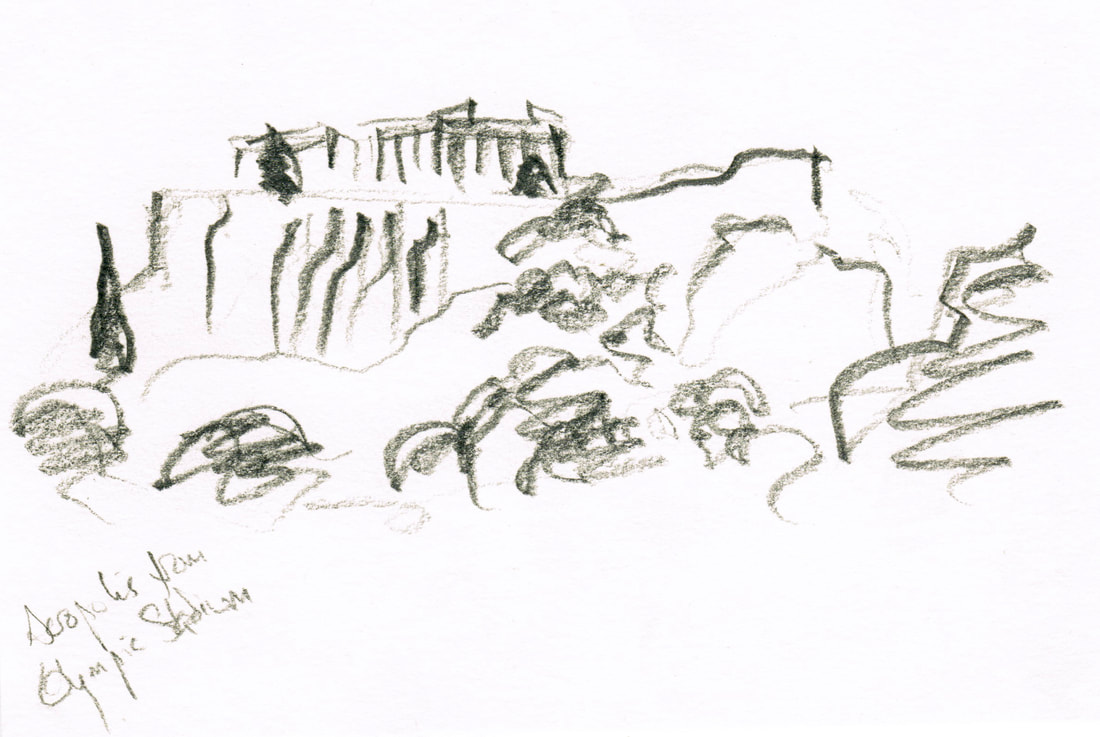
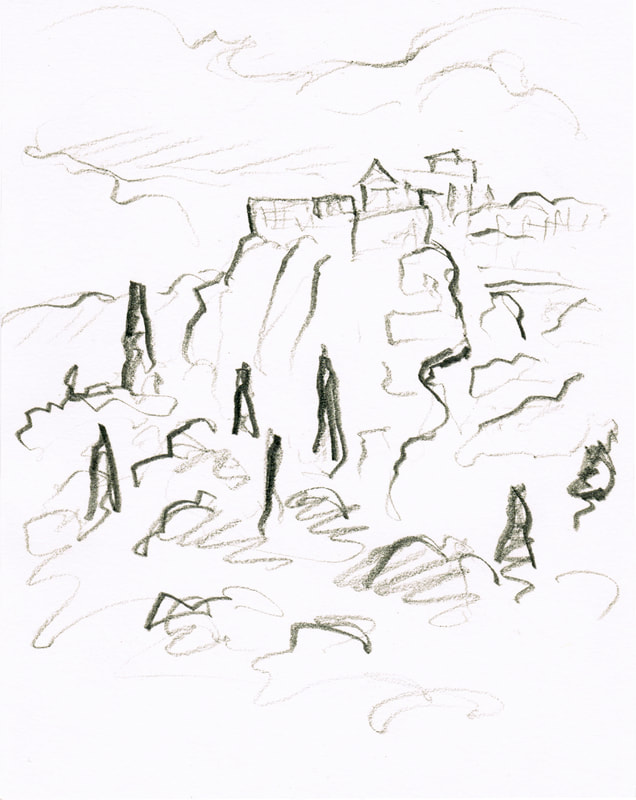
The first abbey I carved was intended as only a black and white piece, so it had a good bit of lacework carved out of the structure. I've carved a mirror image of it, more solid with see through windows, to test out as well. These are all just snapshots, not finished sketches since none of the prints are finished either, but I have enough to share the project taking shape. It's fun to see it beginning to make its way from a few color sketches into carved prints. Eventually I may add another place or two as well. The Acropolis means a lot to me after my summer in Athens, or perhaps the temple at Sounio. I almost always start a small, experimental project in summertime. After doing all the very large Rowan Oak pieces last year, doing something small (and prints that don't have to line up exactly perfectly) feels light and easy. Just right for summer. I've gotten a little bogged down in my current three block print, so it was fun to do this small fast one over the last couple of days. I'm still working on laying out that book of my Dad's poems, and there was one lone poem near the middle, bracketed by two really good pairs before and after, and instead of disrupting one of the pairs, I decided to just do a small illustration. We're keeping the book of history poems in chronological order, so I couldn't just shuffle things around too much. This is Glastonbury Abbey, which I've visited twice over the years, and it will accompany a poem about the dissolution of the monasteries. I'm really happy with how it turned out, which feels especially nice as I struggle with the other print.
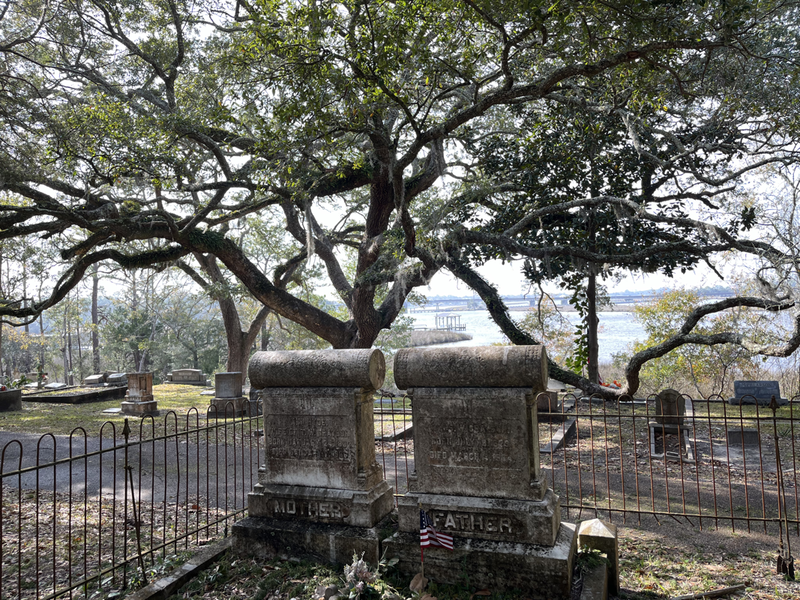
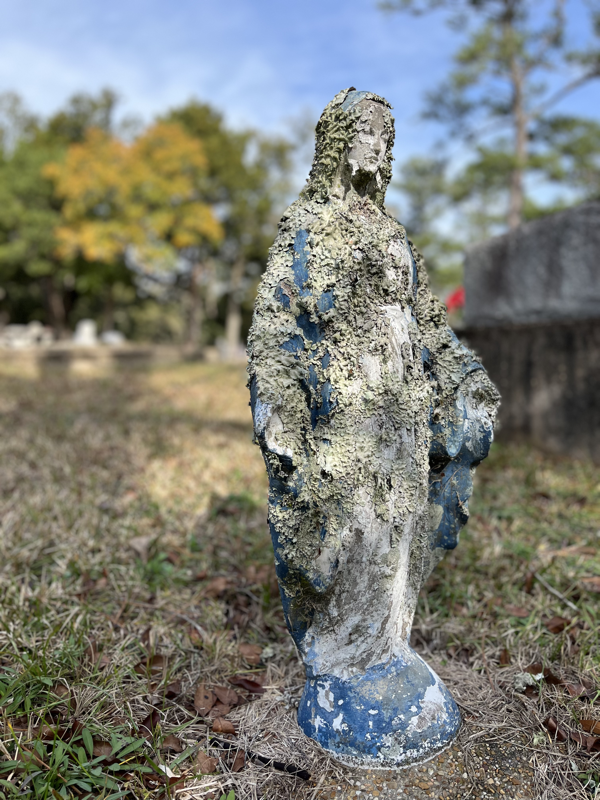
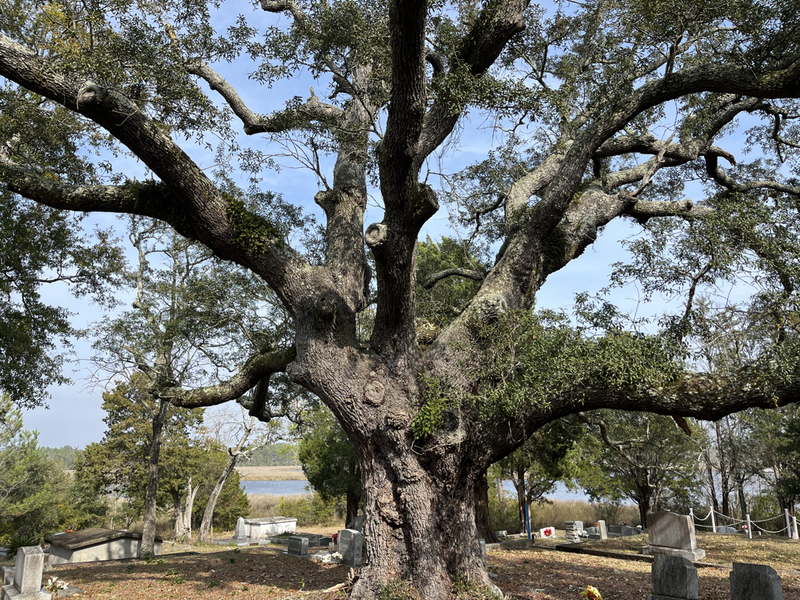
I took a day trip into Arkansas with two photographers this past week. I drove and Matt played tour guide, and one of the places he took us was to this burial monument just outside Earle. It's the grave of a former slave who became one of the biggest land owners in the county. His monument sits up on a burial mound surrounded by cotton fields, and it feels very appropriate and wild and beautiful. I sketched it quickly in black and white, trying not to keep the faster photographers waiting, and then I sketched quickly again at the graveyard outside the church where the same man, Rev. Washington, was pastor. I couldn't stop thinking about the place, though, and apparently I'm in good company because Carroll Cloar, who grew up in Earle, also painted this angel. I went back with a much bigger sketchbook and my watercolors a few days later and did the sketch at the top. Here's a quick sketch I did from a photo I took after I got home from the first trip. I'm pondering a print of it, and I wanted to do a little bit more zoomed out sketch while it was all still fresh in my mind. Watch this space for more versions...
I posted snapshots of my museum sketches before I got home, but here are the scans that are a little cleaner and easier to see. I had so much fun doing these. The blue and black O'Keefe was a great starter sketch with simple colors and flat planes. Some painters are a lot easier to sketch than others, especially in the U.S. where most museums only allow you to use dry media. I love doing tiny watercolors with a self contained brush in Europe, but the museums here are super restrictive. Using only dry media means you have to have every color to match the painting you want to sketch since you can't mix colors. I used Inktense pencils (ink rather than watercolor ones so darker and richer, but which still activate with a little water over the top) and Neocolor watercolor crayons, which also take a nice wash later. There was a gorgeous eggplant piece I would have enjoyed sketching (with a bench right by it even! I had to sit in the floor for all three of these), but I didn't feel I could get the colors right. Same with an iris one. So I chose ones I felt would go reasonably well, and the process of drawing helps me look more closely at how artists make the choices they do. They copies are never exactly right. The sunset Shelton piece is more vivid than the original -- again, I had to use the colors I had, plus museum lighting is always pretty dim to protect the art, so I usually end up a little more vivid than the original, just hoping not to get into "garish" territory. I was overall really pleased with both of these.
After lunch I saw the permanent collection, which had a lot of great late 19th century/early 20th century works, including a couple by George Inness, one of my favorites. I loved the super dark sky of the storm behind the trees and the richness of the depth. It took a while to get the layers right. I used more crayons and less pencil with this one. I'm a little less satisfied with it as a copy, but I loved doing it. I really enjoyed my quick trip to Atlanta. It helped that I drove in Monday evening, parked the car, and didn't move it again until I left Thursday morning. I could walk to the High Museum (my main reason for the trip), but I was also just across from Piedmont Park, an enormous urban park that had some lovely old trees and also some views out to the high rises that reminded me of the views from Central Park. I walked there all three days, and the last day I left the museum early and headed over with my sketchbook. I did a view my friend Sri had shown me, across the lake and off to the Midtown buildings, and I sketched one of a dozen fantastic trees I saw. I had forgotten my dip pen, and I was just finishing up (hallelujah!) a sketchbook that didn't accept my regular fountain pens. Even the brush pens had trouble getting purchase on that paper, which is why I've done so very many Inktense pencil sketches lately (like the skyline above). I've enjoyed stretching myself to use other materials, but I'm thrilled to be going back to my regular Handbook. I miss the smoother paper that also dries more quickly, I miss the pocket in the back, and the ease with which it fits on my regular scanner instead of my oversized one. This one is a Hahnemühle, and I liked the slimmer book and the slightly wider format (also the reason it didn't quite fit on my scanner), but the paper bled through badly, and I've really been missing my pens. It's good to try new things, but I was happy to use one more museum trip, using dry materials anyway (Inktense plus neocolor crayons) to finish it off. Here is one more non-museum sketch. I walked out on the tiny balcony my first morning there (I love a balcony) and spotted the moon setting through the trees. I grabbed a chair and my sketchbook and drew it quickly before breakfast. Traveling always gets me sketching at a higher frequency. At home I can think, well, I'll see that again, but on the road, you've got one shot at it. I was so glad I did before settling in for breakfast. It was a lovely way to start the day. And then I got to the O'Keefe show and saw probably 10 paintings of hers with the moon and felt very in synch with a painter I greatly admire.
|
online store Martha Kelly is an artist and illustrator who lives and works in Memphis, Tennessee. Get occasional studio email updates. Categories
All
|